

How We Learned to Do This:
14 Years of Small Improvements
When people ask how we built L&S Artisan Meats, the honest answer is simple: we didn’t build it all at once.
There was no five-year plan. No investor deck. No polished vision board. What exists today grew slowly — season by season, year by year — shaped by trial, error, and the willingness to adjust.
The Beginning
In 2009, Shawn purchased what was then a commercial chicken operation outside Cotacachi. He was looking for a fresh start and ran it as a chicken farm for several years.
In 2012, something shifted.
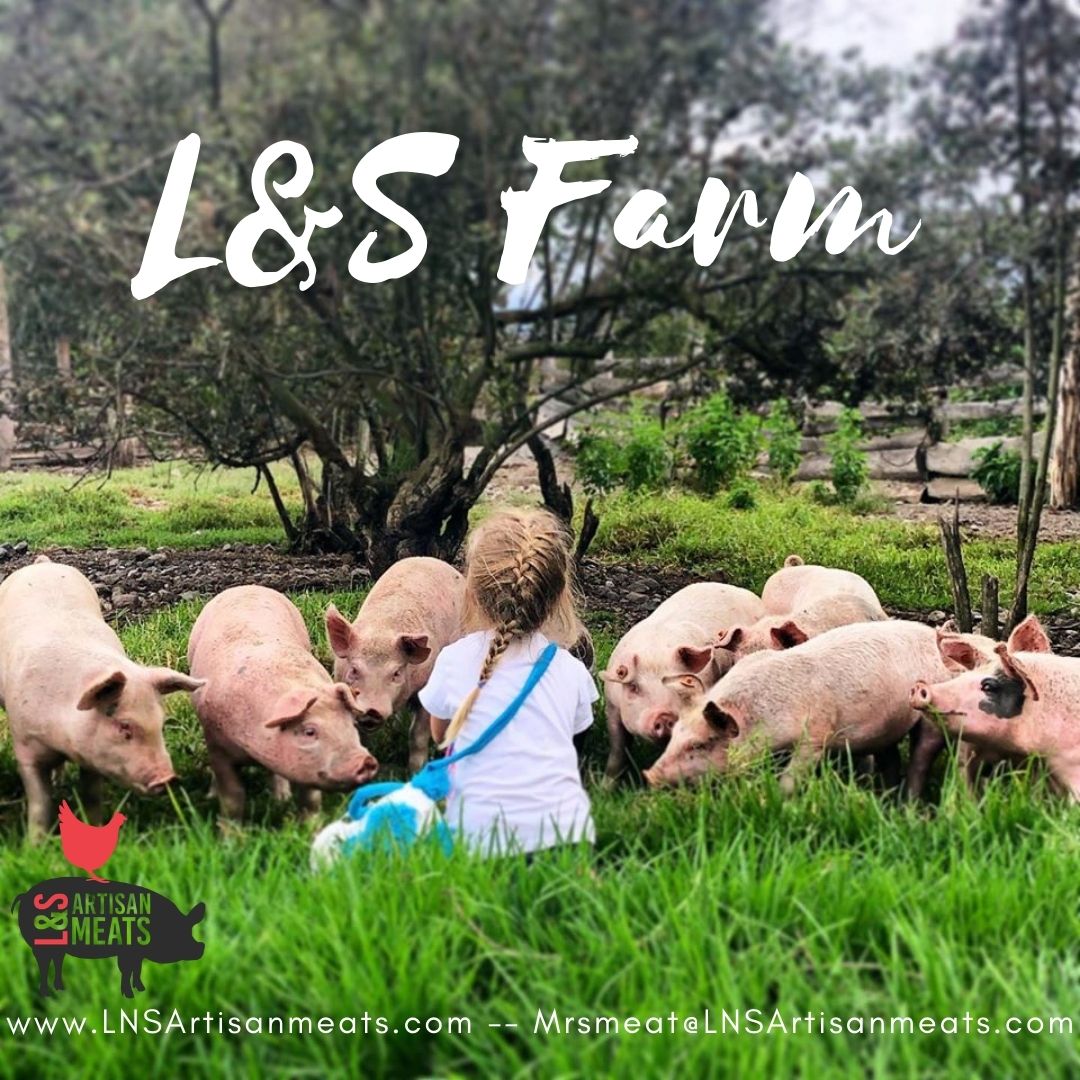
Lindsay, backpacking through the area, stopped by the farm. That same day — by coincidence or good timing — Shawn purchased five piglets to serve as “animal tractors” for a developing permaculture project. They were never meant to be the foundation of a meat business. They were simply part of an experiment in land regeneration.
But those five pigs changed the direction of everything.
From there, the farm began to evolve. Slowly.
Learning by Doing (and Sometimes by Failing)
Neither of us arrived as experts.
We had to learn how to raise animals in alignment with our goals and values. We had to learn how to process meat properly. We had to learn how to build systems that worked not just in theory, but in mud, rain, heat, and real life.
Shawn dove into the craft of curing, aging, and smoking, motivated partly by missing the specialty meats from his hometown butcher in Holdrege, Nebraska. The first real demand came almost by accident: a group of North Americans toured the farm while chickens were smoking on a barrel smoker. A few were sold. Then more were requested. The response was immediate.
Meanwhile, Lindsay stepped into building the structure behind the scenes, organizing sales, communicating with customers, and shaping how the business operated beyond the farm gate.
We weren’t dividing tasks based on formal training. We were dividing them based on necessity.
We grew into our roles at the same time the farm was growing.
The Volunteer Years
In the first five years, more than 200 volunteers — ranging from 18 to 65 years old — came from around the world to learn about permaculture, animal husbandry, butchery, and meat processing.
Those years were formative.
Together, we experimented constantly. We tried systems that looked good on paper but failed in practice. We adjusted fencing layouts. We modified housing. We reworked feeding systems. We rebuilt infrastructure more than once.
Temporary solutions slowly became intentional designs.
And perhaps most importantly, we learned that improvement rarely comes in dramatic leaps. It comes in small corrections repeated over time.
Why Our Farm Doesn’t Look Like Anyone Else’s
People sometimes expect there to be a template, a model farm we copied or a system we replicated.
There isn’t one.
Our rotational pastures developed because of our specific climate, soil, and terrain. Our custom houses and feeders evolved because what we could purchase off-the-shelf didn’t quite fit our needs. Our fencing systems were refined because movement matters, for land health, for efficiency, and for daily workflow.
Every adjustment answered a specific question:
Does this work here?
Does this make daily tasks smoother?
Does this hold up over time?
If the answer was no, we changed it.
If it worked but wasn’t efficient, we refined it.
If it looked good but didn’t withstand reality, we rebuilt it.
Functional Over Perfect
One of the biggest lessons over 14 years has been this:
“Perfect” is not the goal.
Functional is.
Durable is.
Adaptable is.
A system that performs consistently through wet seasons and dry seasons matters more than one that looks impressive for a photo. Design, for us, has always meant reducing friction — for the land, for the animals, and for the people doing the work.
Most improvements on this farm have been quiet. They wouldn’t make headlines. But they compound.
Growing With the Community
What began as small sales to neighbors in Cotacachi gradually expanded. Word spread to Quito, then Cuenca and Baños. In recent years, deliveries have reached Ecuador’s coastal cities as well.
Today, we employ staff from neighboring communities like La Calera, Imantag, and San Martín. The systems that took years to develop are now being taught and refined collaboratively. The learning hasn’t stopped, it’s simply become more structured.
The scale has grown. The commitment to steady improvement hasn’t changed.
Still Learning
Fourteen years later, L&S Artisan Meats looks established from the outside.
But internally, the mindset remains the same as it was in the beginning: observe, adjust, refine.
There is no final version of this farm or the business. There is only the next improvement.
What started with five piglets and a willingness to experiment has become something far larger than we imagined. Not because we had a master plan — but because we kept showing up, paying attention, and building what works.
And we’re still learning.
Award Winning Produce
Order Online
L&S Artisan Meats is Ecuador’s finest pork, chicken, and beef producers—farm-to-table pasture-raised pork, aged meats, gourmet sausages, and smoked products since 2012. We are family-owned and operated, live and work here amongst the volcanoes of the Northern Andes…