

From Fire to Feast
The Story of Smoked Sausages and the Communities That Shaped Them
There’s something deeply human about smoked sausage.
Much of what we’ve been exploring comes back to one essential need: preserving meat. Long before refrigeration and modern supply chains, people gathered around fire and smoke to make food last, stretch resources, and create something flavorful enough to bring everyone back to the table.
Today, we’re focusing on smoked sausages and the role they’ve played throughout history. They weren’t just food—they were survival, celebration, and identity.
Across cultures, recipes evolved based on what was available: local spices, climate, wood for smoking, and traditions passed from one generation to the next. Every smoked sausage tells a story—not just of ingredients, but of people.
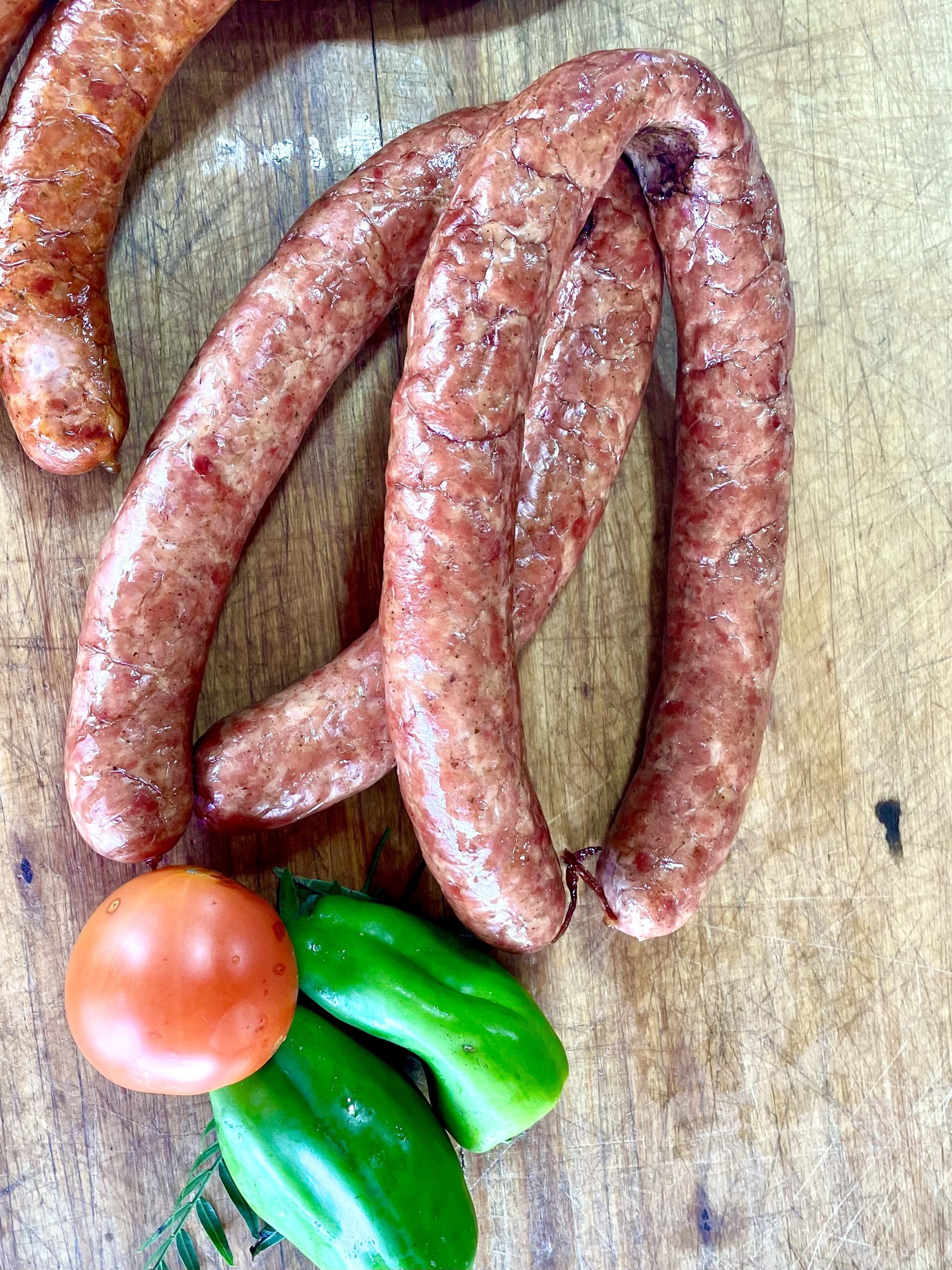
This week, we’re celebrating four smoked sausages we carry and the communities behind them: kielbasa, andouille, smoked links, and linguica.
Kielbasa: The Taste of Polish Tradition
Kielbasa simply means “sausage” in Polish, but outside of Poland, it has come to represent a specific style: garlic-forward, lightly spiced, and traditionally smoked.
In Poland, kielbasa is central to holidays, especially Easter. Families gather to share meals where kielbasa plays a starring role, often served with eggs, bread, and horseradish. It’s a symbol of abundance after long winters and a reminder of the importance of preserving food through colder months.
Smoking kielbasa wasn’t just about flavor; it was essential for survival. The process allowed families to store meat safely while also creating something deeply comforting and satisfying.
Andouille: Smoke, Spice, and Cajun Roots
Andouille sausage has its roots in France but found its true identity in Louisiana, where French techniques met bold Cajun flavors.
Unlike milder sausages, andouille is heavily seasoned and double-smoked, giving it that deep, rich, smoky intensity. It became a cornerstone of Cajun cooking—especially in dishes like gumbo and jambalaya.
In Cajun communities, food is about gathering. Large pots, shared meals, and recipes passed down through generations define the culture. Andouille isn’t just an ingredient, it’s part of a tradition where cooking is communal and meals are meant to be shared.
Smoked Links: A Reflection of American Barbecue Culture
Smoked links are a broad category, but in the U.S., they’re deeply tied to barbecue traditions—especially in the South and Texas.
These sausages often reflect a blend of cultural influences: German, Czech, African, and Mexican. Over time, communities adapted sausage-making techniques to local tastes and available ingredients.
At barbecues, smoked links are a staple, served hot off the pit, shared among friends and family. They represent something simple but meaningful: time spent together, slow cooking, and food made with patience.
Linguica: Portuguese Flavor and Celebration
Linguica comes from Portugal and is known for its bold seasoning, garlic, paprika, and a hint of spice. It was traditionally smoked and cured to preserve pork in coastal and rural communities.
As Portuguese immigrants brought linguica to places like Brazil, Hawaii, and parts of the United States, it became a key part of local cuisines. It’s often grilled, added to stews, or served at festivals and gatherings.
Linguica is a celebration sausage—flavorful, vibrant, and meant to be shared. It reflects a culture where food is central to connection and tradition.
From Our Smokehouse to Your Table
Each of our smoked sausages is made with that same respect for tradition—carefully seasoned, slowly smoked, and crafted to bring people together.
Whether you’re adding kielbasa to a holiday meal, building a gumbo with andouille, throwing smoked links on the grill, or slicing linguica for a quick dinner, you’re continuing a story that spans generations.
Award Winning Produce
Order Online
L&S Artisan Meats is Ecuador’s finest pork, chicken, and beef producers—farm-to-table pasture-raised pork, aged meats, gourmet sausages, and smoked products since 2012. We are family-owned and operated, live and work here amongst the volcanoes of the Northern Andes…